
Author: Kevin Wieging
The basic science of electricity is rooted from Ohms Law: E= I x R To avoid getting into an explanation of algebra, I hope to keep the explanations basic enough to understand the end result and the causes of issues related to the relationship of voltage, current, and resistance. Also explain the cause of common issues.
To explain the formula E= Voltage , I= Current, and R= Resistance or (voltage= current x resistance). Electricity is like a water hose and voltage (v) is the pressure of the flow through the cord. Voltage makes electrons flow. Current is measured in amperes and the rate of electron flow and related to the size of the hose. The larger the hose the less pressure and the larger the hose, the reduction of pressure. This is a good relation to the diameter and size of your wire (cord).
Resistance (measured in ohms) is the prevention of flow through the hose or in this case cord. A light bulb is a good example of resistance and the bulb itself glows based on the amount of resistance. Related to the use of extension cords, it is also important to understand that the longer the length of your cord, the greater resistance increases. In both examples, heat occurs when resistance is increased.
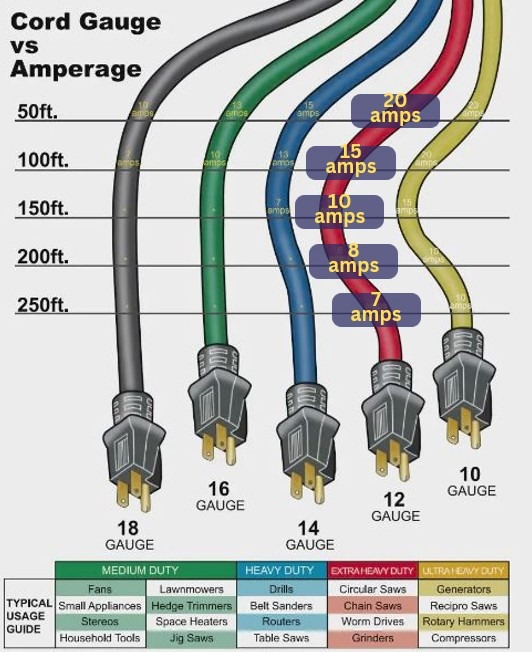
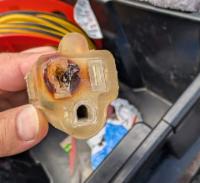
Why does size of cord matter? Both diameter and length influence the amount of resistance (loss or drop in power (voltage). Diameter of cord is measured in gauge and it is important to provide a cord with sufficient gauge (so that correct voltage efficiently reaches the end) for the distance of the run. It is recommended to limit cord runs to less than 50’ and use 12/2 gauge. Cords too long will create heat and possible melt insulation or create burnt end of cords.
Keep in mind that golf scores and cords have something in common, the lower the number, the better the putt putt golf score and extension cord. 14 ga. or less is acceptable for light duty, 12 ga. acceptable for operating a blower, and 10 ga. for even more industrial and higher current flow (amperes). Cost for extension cords will increase based on size of wire. Refer to the illustration related to cord length vs. amperage.
Does length of cord matter? Loose daisy chained cords or moisture is also a cause in burnt ends. This occurs when multiple cords are connected together to extend individual cords longer than what is acceptable and poor grounding. Use outdoor rated cords of at least 12 gauge and limit runs to less than 50’. It is best practice to locate your source of power and set up where the length of any cord runs can be minimized and also minimize trip hazards!
Why Require a 20 amp outlet for power to your bounce house? This defines the capacity for electricity to flow to the devices (blower) that is connected and what is required to efficiently operate it. Amps are the measure of the rate of current flowing through a circuit and for use of a blower the range may vary 15-20 amps. You can also refer to the technical data on the type of blower you are using to specifically reference the start-up and continuous requirements for power to the device. Start up of a device does require a spike and then the amount will lessen.
Be CAREFUL, because connecting multiple blowers may exceed the capacity (amperes) of the circuit. Multiple outlets may be on the SAME CIRCUIT if direct wired within the same room or general area. Be sure no other devices like cooking devices, the DJ Service, etc. are also plugged into and drawing from the same circuit.
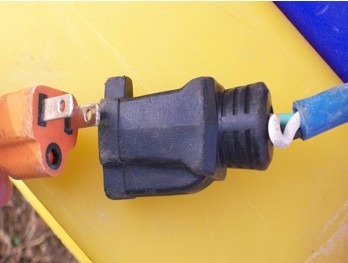
What are the little round things sometimes missing on cords? Ground prongs (the rounded prongs on a plug) are sometimes broken off and should be the start of cord inspection. The key function of grounding is to prevent shock or escape of electricity within a circuit. Ground also prevents electrical shock from an appliance or the blower used to inflate the inflatable amusement. The INSULATION or coating of the cord is also very important and should not be damaged or worn exposing bare wires that will allow current to directly escape the hose we discussed in the beginning of our explanation.
What is a GFCI and is it required? Required use of a GFCI (Ground Fault Circuit Interrupter) is required in the amusement ride safety standard (ASTM F2374-24 5.16.4).
Many of the outdoor outlets you connect to are already equipped with a GFCI based on National Electric Code (NEC). The purpose of a GFCI device is to prevent shock monitoring imbalances for current leaving and returning within a circuit. It functions to interrupt the circuit the second a fault is detected and preventing electrocution.
If a GFCI outlet is already wired, do NOT duplicate the use of multiple GFCI devices in the same circuit. Multiple GFCI devices on the same circuit will not function properly. GFCI use is always REQUIRED where moisture might be present, hence based on National Electric Code (NEC) a plug you would be using for outdoor use is equipped with a GFCI outlet (because of the possibility for moisture). Temporary GFCI devices can be purchased and used but must be located within 12” of the power source. You will know a GFCI plug is present on an exiting outlet based on the “test” and “Reset” button indicators.
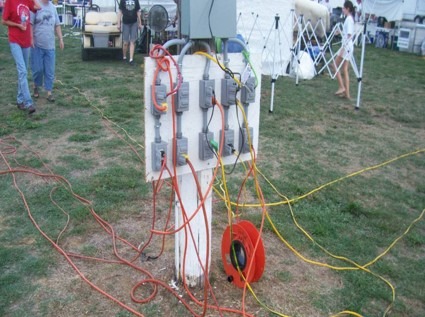
How to eliminate trip hazards? Making recommendations for placement of equipment and being familiar with the availability of the location for power will allow you to place the entrance away from cords. Blowers that require power are generally located on the back side of the units away from the entrance. If a necessary for a cord to be located in a walkway, it should be covered and protected to avoid trip hazards or damage to the cord.
When plugging in cords to an outlet, make sure the cord hangs directly down and is of sufficient length. If the cord does not hang straight down risk of tripping and unplugging the cord will create a hazard.
Ready, Set- GO! Cord inspection should be a regular process throughout the year and verify that ground prongs, visual damage to the cord insulation has not occurred, and damage to the ends has not occurred due to misuse. This can be documented in your pre-opening inspection process that is also a ASTM standards requirement.
Pre-season training for staff to properly plug in and remove cords to avoid pulling or stretching, cord wrapping, and storage of blowers. Replacement cost for quality 12/2 cords is significant and communicating the cost of replacement with staff can encourage why making sure they are not damaged is important. Training should be provided on cord storage and having a standard operating procedure for how cords will be folded creates consistency and accountability.